


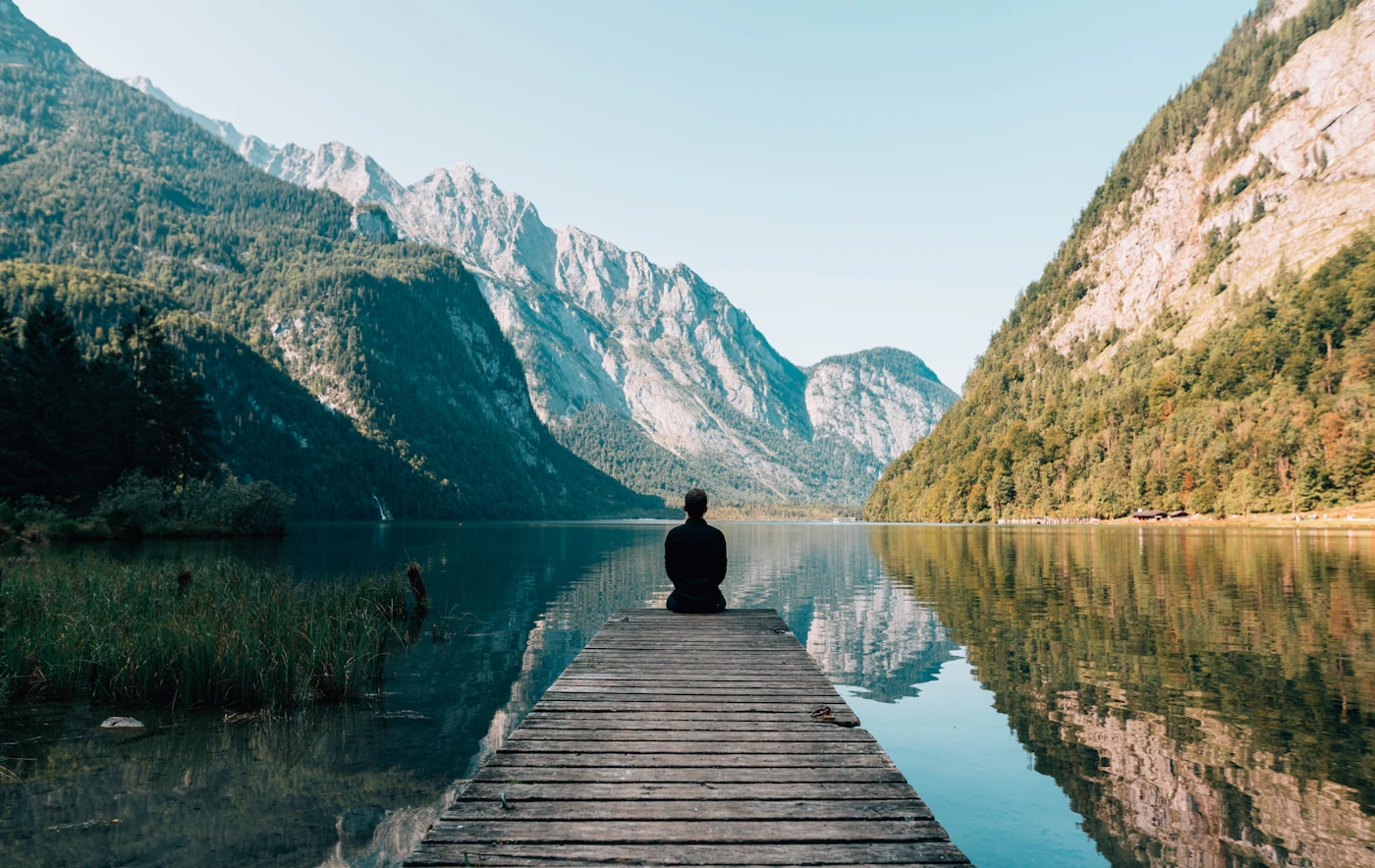
Morocco catches most first-time visitors off-guard. You step off a budget flight from London or Paris, pass through the organized chaos of Marrakech airport, and within two hours find yourself on a mountain road climbing toward Berber villages at 1,500 metres, the city entirely invisible below you. Or you drive south along an Atlantic coast lined with argan trees, arrive at a cluster of surf huts in Taghazout, and discover that the swell is up and a yoga class starts in twenty minutes on a rooftop above the ocean.
These two experiences — the Atlas and the Atlantic — define Morocco’s retreat geography, and they are genuinely different from each other. What they share is a quality that is harder to find in European destinations: real otherness. Morocco is not sanitized for tourism. The medinas are dense and disorienting. The mountains are genuinely wild. The call to prayer arrives at 5:15am and is audible from the yoga shala. This is either enchanting or unsettling, and knowing which reaction you’ll have matters more than any other factor in deciding whether Morocco is your retreat destination.
For the right practitioner — the one who wants her yoga practice to exist within a genuinely foreign cultural context, who wants to be actively changed by the place she’s in — Morocco is one of the most rewarding retreat destinations on earth.
Why Morocco for Yoga
The flight time from London is approximately 3.5 hours. From Paris, under 3 hours. From Madrid or Seville, 90 minutes. Morocco is geographically accessible in a way that India is not, but it offers a degree of cultural difference and landscape drama that no European country matches. This is its fundamental proposition: maximum otherness for minimum travel effort.
The retreat conditions are genuinely good. Atlas Mountain riads sit at altitudes that produce clear air, dramatic light, and the kind of coolness that makes morning practice invigorating rather than sweaty. Atlantic surf retreats benefit from consistent swell, warm weather, and a food scene built around fresh fish that is excellent by any standard. And Moroccan food culture — spice-layered tagines, preserved lemons, argan oil, the theatrical ceremony of Moroccan mint tea — is a genuine complement to retreating rather than an afterthought.
Morocco is also affordable. This is not a trivial point. For European retreat-goers accustomed to Italian or French pricing, the combination of budget flights, strong exchange rate, and genuinely lower local costs means a week-long Morocco retreat represents exceptional value.
Best Time to Visit
October through November is widely considered the finest time. Summer heat has lifted, the Atlas snow hasn’t arrived yet, the Atlantic swells are building, and the country is in its post-harvest season with markets full of seasonal produce. The light in Morocco in late October is extraordinary — honey-coloured, long, and flattering in the particular way that North African autumn light tends to be.
February through April is the other prime window. Almond blossom appears in the Atlas valleys in February — one of the most beautiful things Morocco produces. March and April are green and clear at altitude. The Atlantic coast’s surf season is at its peak.
December and January are viable for the Atlantic coast — surf conditions are good, and the coast stays warmer than the mountains. The Atlas in midwinter can be cold and occasionally snowbound at higher elevations, which some practitioners find extraordinary and others find merely cold.
Avoid May through September for mountain and inland retreats. Marrakech summer heat is extreme — 40–45°C is normal, and temperatures above 38°C make outdoor yoga practice unsafe. Some Atlantic coast retreats run year-round, and the ocean keeps the coast cooler, but surf is poor in summer and the area becomes crowded with European holidaymakers.
What to Expect From Retreats Here
Riad retreats in the Atlas Mountains are the signature Moroccan retreat model. A riad is a traditional Moroccan courtyard house — inward-facing, built around a central garden or fountain, with rooms opening off the courtyard on multiple levels. In the mountains above Marrakech, these have been converted to small retreat centres of extraordinary beauty. Zellij tilework, carved plaster ceilings, arched doorways, hand-woven Berber rugs on the floors of yoga studios — the aesthetic is genuinely sumptuous and entirely of the place.
Groups are small: most mountain riads host 6–12 retreat guests. The practice space is typically a roof terrace or a large ground-floor salon cleared for yoga. Both are beautiful and both have constraints — roof terraces can be windy, salons can echo. Ask the operator specifically where sessions are held.
The hammam is integral to the Atlas retreat experience and should not be skipped by first-timers. A traditional Moroccan hammam involves a sequence of steam rooms at different temperatures, a vigorous scrub with a kessa mitt that removes dead skin dramatically, a ghassoul clay mask, and a final rinse that leaves the skin extraordinarily soft. Combined with yoga practice, the physical effect is a depth of bodily relaxation that is unusual and powerful. Some riad retreats have private hammams; others take guests to local hammams in nearby villages (an experience in itself).
Atlantic surf retreats operate differently — they are more casual, more communal, and more physically oriented. Mornings start with yoga before the sea breeze picks up; afternoons are for surfing lessons or free surfing; evenings are communal dinners and often an optional meditation or breathwork session. The demographic skews younger and more international than mountain retreats, and the energy is correspondingly more social.
Best Areas and Regions
Ouirgane and the Neltner Route (High Atlas): The valley of Ouirgane, about 60km south of Marrakech at 1,000 metres, is the most accessible Atlas retreat territory. A handful of excellent riads and guesthouses operate here, and the landscape — walnut groves, river valleys, Berber villages — is immediately rewarding. Higher into the mountains, the route toward the Toubkal massif (North Africa’s highest peak at 4,167m) passes Imlil, a village that serves as the base for mountain trekkers and increasingly for higher-altitude retreat programmes.
Ourika Valley: Closer to Marrakech (45 minutes) and slightly lower in altitude, the Ourika Valley is green and fertile, with a river running through it and a series of waterfalls that make for good excursion walking. Several retreat operators work here, and the proximity to the city makes it a viable option even for a 3–4 day programme.
Taghazout and Surrounds (Atlantic Coast): The village of Taghazout, 20km north of Agadir, is the centre of Morocco’s surf-yoga scene. It’s a small fishing village that has been essentially colonised by surf culture while retaining its local character — a combination that creates an atmosphere both authentic and internationally accessible. Neighbouring bays like Hash Point, Killer Point, and Anchor Point provide different surf breaks for different levels. The village of Tamraght, 5km south, is slightly less developed and increasingly preferred by retreat operators who want a quieter base.
Imsouane: An hour north of Taghazout, this small fishing bay has one of Africa’s longest surfable waves — a point break that extends for 800 metres in good conditions. Imsouane is significantly less developed than Taghazout, which makes it better for those who want a genuine small-town Morocco experience rather than a surf-camp village.
Essaouira: The walled coastal city four hours north of Marrakech by road is the most distinctive retreat base in Morocco. It’s a place for creative people — musicians, painters, writers — drawn by its particular wind-bleached atmosphere, its blue and white medina walls, its extraordinary local goat’s cheese and argan oil. Surf in Essaouira is primarily for windsurfers and kite surfers; yoga retreats here tend to be smaller, more eclectic, and more focused on meditation and creative practice alongside yoga.
Yoga Styles Available
Hatha yoga and yin yoga dominate the Atlas Mountain riad retreats, reflecting the contemplative, inward-oriented nature of the mountain setting and the European demographic that travels there. The quietness of the landscape invites slow practice, and the physical recovery element of yin pairs well with the hammam and mountain walking.
Vinyasa yoga is the primary style at Atlantic surf retreats — the physical energy of the surf-yoga circuit calls for a more dynamic practice, and teachers on the Atlantic coast typically programme more energetic morning classes to set practitioners up for physical activity in the afternoon.
Yin yoga combined with sound healing — Tibetan bowls, Moroccan ghaita and percussion — appears at several mountain retreats as an evening programme. Morocco’s musical culture is rich and its instrument-makers outstanding; some retreat operators have built genuine partnerships with local musicians.
Ayurveda in Morocco is not locally rooted in the same way it is in Kerala, but the Moroccan tradition of herbal medicine (known as tibb) and the country’s extraordinary pharmacopoeia of medicinal plants, essential oils, and mineral treatments create a parallel tradition. A few retreat operators incorporate Moroccan herbal medicine alongside yoga in a way that is culturally honest rather than appropriative.
Who It’s Best For
Morocco rewards the curious traveller — the practitioner who wants her retreat to teach her something about the world as well as about herself. The cultural encounter is real here: local staff, Berber guides, hammam attendants, and village children are all part of the texture of an Atlas retreat in a way that is absent from purpose-built wellness resorts.
Atlantic surf retreats are best for the physically active practitioner who wants yoga to be one element of a broader movement practice, who is happy in a social, communal environment, and who wants the particular pleasure of making unexpected progress at surfing in a beautiful place.
Morocco is not ideal for those who need the full suite of luxury wellness amenities — deep tissue massage, high-thread-count sheets, spa menus. The riad experience is beautiful but rustic; the Atlantic retreats are often deliberately simple. If luxury is your priority, look instead at Portugal retreats or Spain retreats for European comparisons, or Bali retreats for a Southeast Asian alternative.
For those who want a North Africa experience at a more controlled pace, Morocco retreats work best when booked with an operator who knows the country deeply rather than one operating in Morocco opportunistically.
How to Vet a Retreat
Morocco’s retreat market, while growing fast, is less regulated and less mature than Western European alternatives. This creates both opportunity (some genuinely extraordinary small operators) and risk (some disappointingly poor quality, particularly on the surf coast where operations have opened quickly to meet demand). Our vetting approach at World’s Yoga Retreats pays particular attention to Morocco because the variance in quality is higher here than in most other destinations.
Critical questions for Morocco:
- Who owns and manages the retreat? Some of the most authentic Atlas Mountain retreats are run by French or British operators who have been based in Morocco for years and have deep local relationships. Others are run remotely and lack quality control on the ground.
- What is the hammam arrangement? Private on-site vs. local community hammam (equally good, very different experience — know which you’re getting).
- What is the food sourcing? Local souks, local farmers — ask specifically. The difference between a retreat that buys in the local market every morning and one that uses a catering supplier is significant in Morocco.
- For surf retreats: what is the surf instruction setup? Licensed instructors, group size, which breaks are used at which levels.
- What is the alcohol policy? Morocco’s Islamic cultural context means many good retreats run completely alcohol-free. If this is relevant to your decision, confirm in advance.
Cost Guide
| Category | Price Range (per person/week) |
|---|---|
| Shared room, Atlas Mountain riad, all meals | €700–€1,200 |
| Private room, mountain riad with hammam | €1,100–€1,800 |
| Surf-yoga camp, Atlantic coast (shared) | €750–€1,300 |
| Premium riad conversion, small group | €1,600–€2,200 |
| Day hammam + session (local community hammam) | €15–€30 |
Flights from London Gatwick or Stansted to Marrakech run year-round on easyJet and Ryanair for £40–£180 return depending on timing. Agadir (gateway for the Atlantic coast) is served from London and some regional UK airports. Transit from Marrakech to Atlas retreat centres is typically 60–90 minutes by transfer; from Agadir to Taghazout, under 30 minutes.
Practical Tips
Arrive in Marrakech at least a day early. The medina demands a day of its own — the Jemaa el-Fna at dusk, a wander through the souks of the Mouassine quarter, lunch in a riad courtyard. Arriving directly into a mountain retreat without this orientation risks missing a significant part of the Moroccan experience.
Pack for temperature swings. Atlas Mountain retreats at 1,500 metres can be 8–10°C at sunrise even in October. By noon, the same terrace can be 22°C. Layers — a fleece, linen trousers, a light down jacket — are essential.
Learn a few words of Darija (Moroccan Arabic) or French. Unlike many tourism-heavy destinations, genuine attempts at local language are received with real warmth in Morocco. Shukran (thank you) and labas (how are you / fine) will open doors.
Bring cash in dirhams. Card payment infrastructure is improving but unreliable outside Marrakech. Retreat operators usually accept cards or bank transfer for deposits, but on-the-ground spending — hammam tips, medina shopping, local restaurants — is cash-based.
Respect the local dress code when leaving the retreat property. In mountain villages, covering shoulders and knees is appropriate and will be appreciated. Atlantic surf towns are more relaxed about beach attire on the seafront, but cover up away from the beach.
Compare with other culturally rich retreat destinations: Turkey retreats, Sri Lanka retreats, Nepal retreats, and Dharamsala retreats.
Frequently Asked Questions
Where in Morocco is best for a yoga retreat?
The two main retreat territories serve fundamentally different needs. The Atlas Mountains above Marrakech — particularly the villages of Imlil, Ouirgane, and the Ourika Valley — offer altitude, silence, Berber culture, and dramatic landscape for deeply contemplative retreats. The Atlantic coast south of Agadir — Taghazout, Imsouane, Tamraght — is the surf-yoga territory, oriented toward physical practice, ocean energy, and a younger demographic. Essaouira, the wind-battered coastal city, is a quieter middle ground that suits creative retreats and those who want a town to wander. Most serious practitioners choose based on what they want their afternoons to look like: mountains or ocean.
What is an Atlas Mountain yoga retreat like?
The typical Atlas Mountain retreat occupies a riad or gîte at 1,200–2,200 metres altitude, above the smog and heat of Marrakech. The air is cooler and noticeably cleaner. Mornings are cold in spring and autumn — sessions often start indoors or in a heated tent before moving outside as the sun climbs. The landscape is Berber: mud-brick kasbahs, walnut groves, sheep on impossible slopes, mule paths connecting villages. Hammam sessions in a traditional bathing house are a central element of the Atlas retreat experience — the physical restoration of a genuine hammam, with kessa scrub and ghassoul clay, is extraordinarily complementary to yoga practice. Days are typically structured around two sessions, a hammam, and an excursion by mule or on foot.
Can I combine surfing and yoga in Morocco?
Morocco is one of the world’s best countries for surf-yoga, and the Taghazout area specifically is one of the most established in that category globally. The Atlantic swells reach the Moroccan coast with consistency from October through April — the same months when the Atlas Mountain retreats are at their best, which creates a fortuitous overlap. Taghazout has been a surfer’s destination since the 1970s; the yoga integration is more recent but now well-developed, with a number of purpose-built retreat centres offering morning yoga and afternoon surf as a complete programme. Water temperatures in winter require a 4/3mm wetsuit.
What is the best time of year for a yoga retreat in Morocco?
October through April is the prime window for most of Morocco. October and November offer the best of all worlds: the post-summer heat has broken, the Atlantic swells are building, the Atlas Mountains are dramatic and clear, and the country is uncrowded. March and April are beautiful — almond blossom in the valleys, clear mountain views, comfortable temperatures. The shoulder of September is possible but can still be very hot. Summer (June–August) is best avoided for inland and mountain retreats — Marrakech regularly reaches 42–45°C, which makes any outdoor practice inadvisable. The coast stays cooler through summer but the surf is minimal.
How much does a yoga retreat in Morocco cost?
Morocco is one of the most affordable dedicated retreat destinations accessible from Europe. Atlas Mountain and Atlantic coast retreats typically run €700–€1,400 per person per week all-inclusive — significantly less than equivalent Italian or French offerings. Some premium riad conversions with private rooms and hammam integration push to €1,800–€2,000, but these remain good value. Flight costs are low: London to Marrakech is under 3.5 hours and regularly available for under €100 return on budget carriers. The Moroccan dirham is soft against the euro and pound, which means on-the-ground costs — hammam, excursions, medina shopping — are very affordable.
Is Morocco culturally appropriate for yoga retreats?
Yes, with nuance and respect. Morocco is a Muslim-majority country with a strong Sufi spiritual tradition, and yoga retreats operate within that cultural context rather than despite it. Good retreat operators in Morocco are attuned to the local culture: they dress modestly in villages, observe local courtesies, and run alcohol-free programmes that respect Islamic custom (the exception being some European-operated riads in Marrakech that serve alcohol to guests — this is legal for licensed establishments but worth knowing). The blend of Sufi mysticism, Berber animist tradition, and Islam creates a spiritual atmosphere that is genuinely complementary to yoga practice for those who approach it with curiosity rather than assumption.